Route: /app/agents/new. Resume in-progress work with /app/agents/new?draft={uuid}.
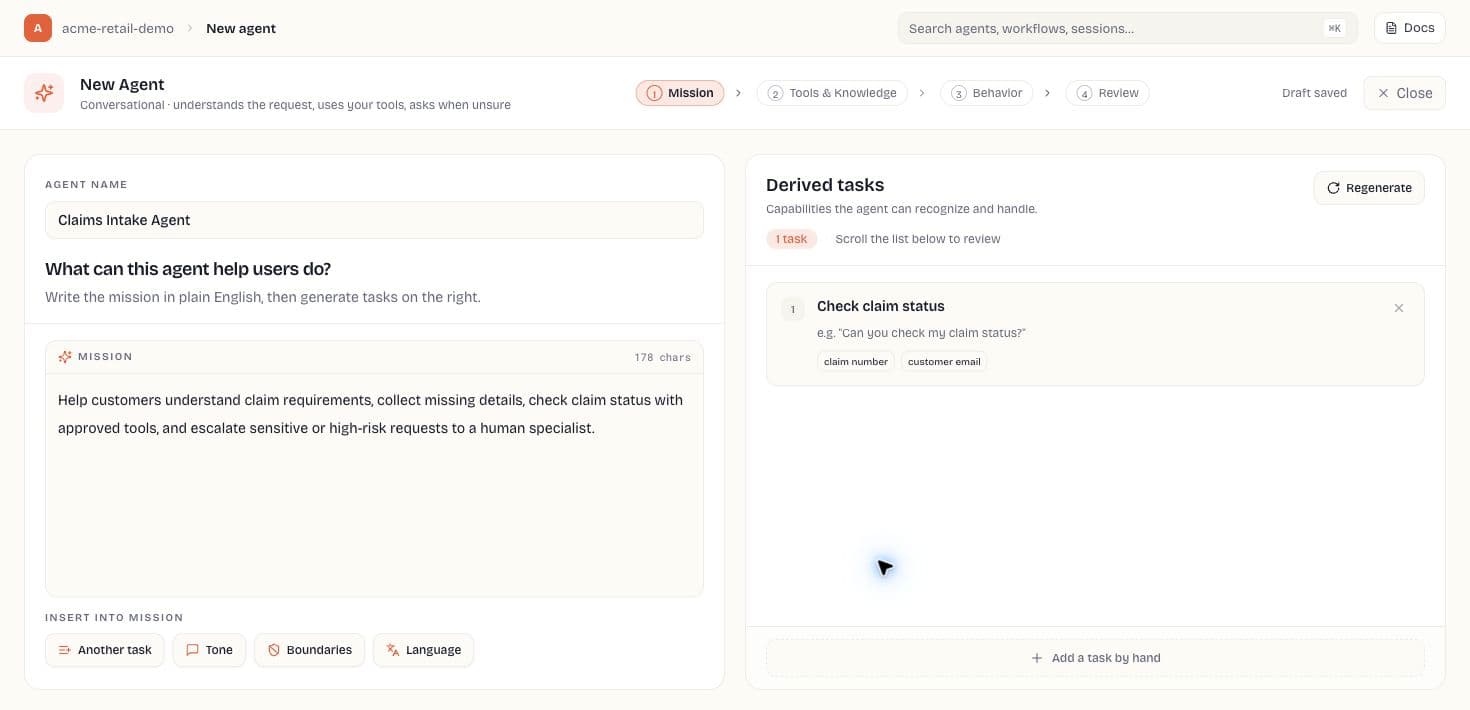
Step 1 — Mission
- Agent display name and mission statement.
- Derive tasks — POST /v1/ai-agent-wizard/derive-tasks when mission ≥ 12 characters (LLM or heuristic fallback).
- Edit derived rows — name, example utterance, needs[], tool bindings, optional SENSITIVE/FALLBACK flag.
Step 2 — Tools & Knowledge
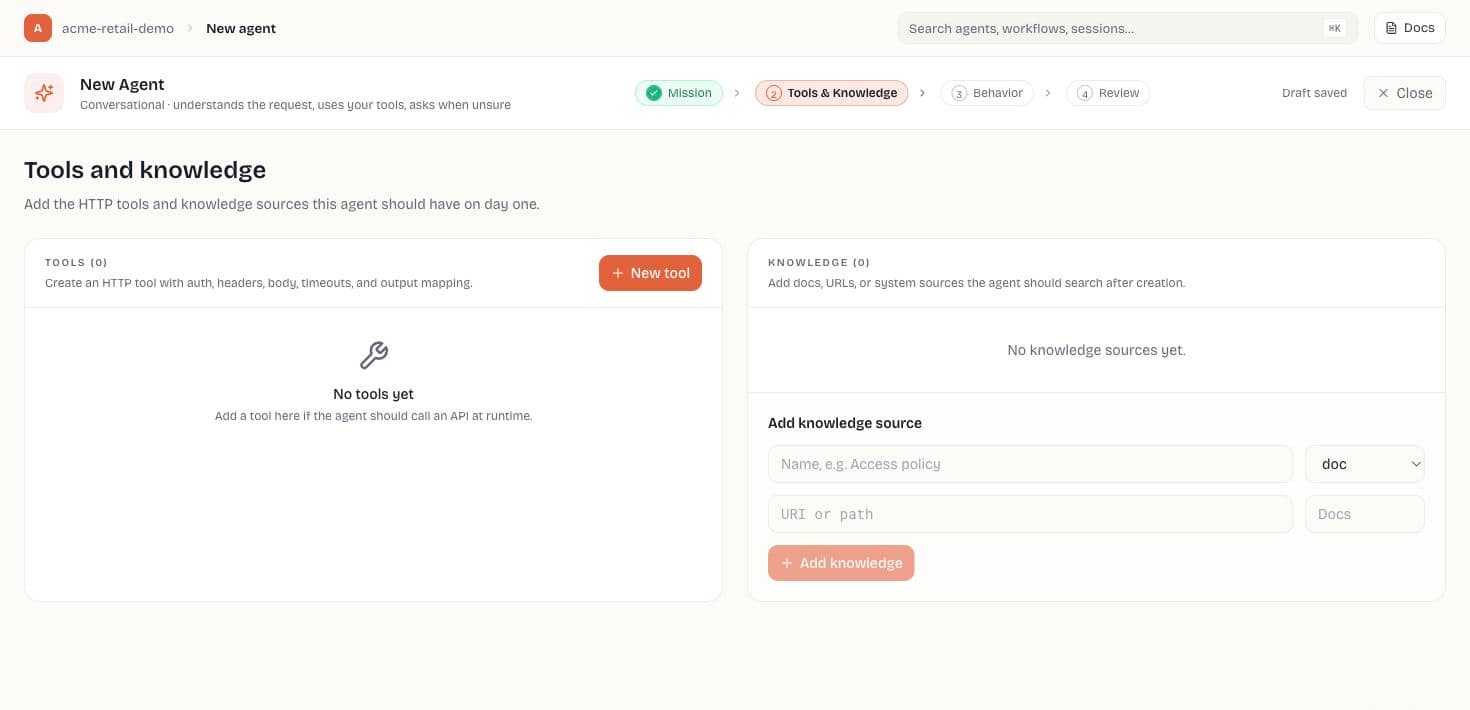
Checkbox grid from GET /v1/workspace-tools. Sensitive tools are flagged. Knowledge sources are typically added after create on the Knowledge tab.
Step 3 — Behavior
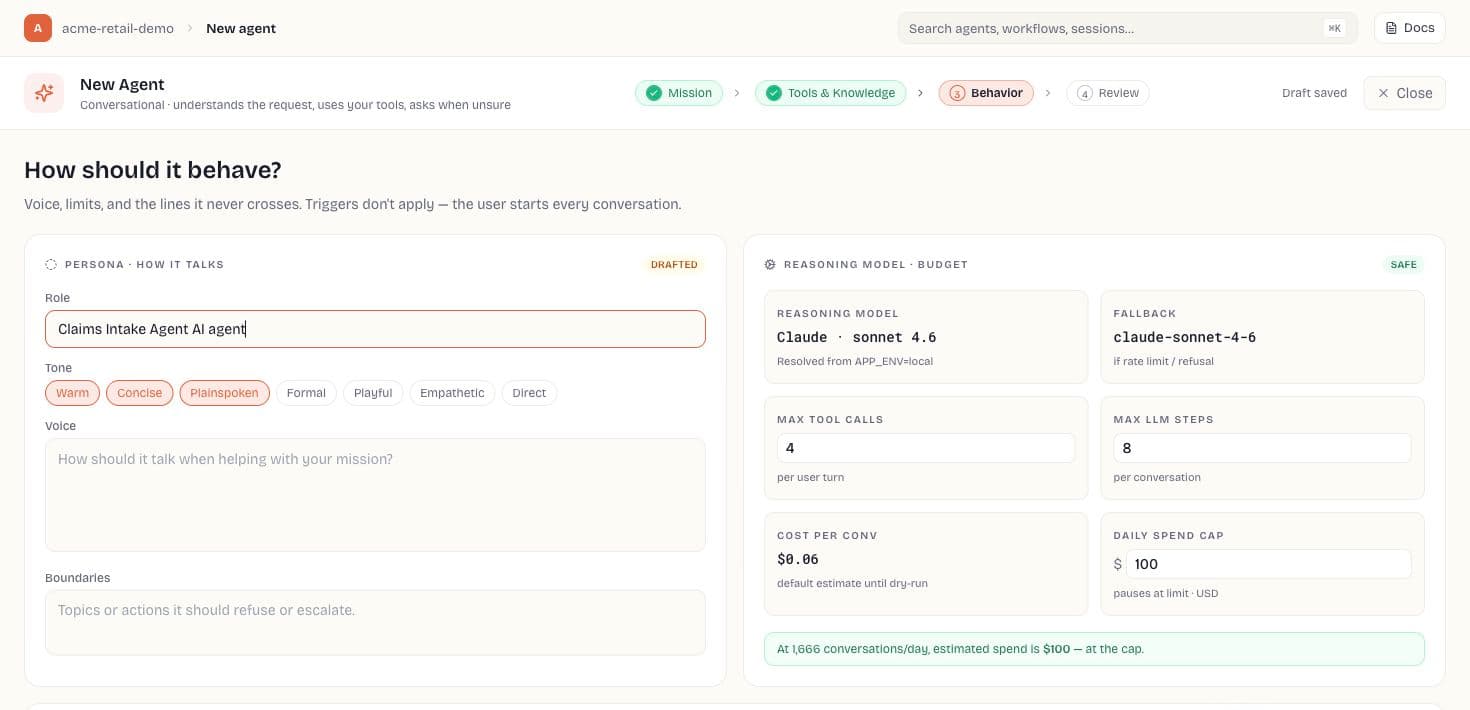
- Persona — title, tone chips, voice, boundaries.
- Limits — max_tool_calls_per_turn, max_llm_steps_per_conv.
- Cost — daily_spend_cap_cents (BUDGET guardrail uses running spend).
- Guardrails — optional rows before create; server also seeds five defaults on create.
Draft autosave
Field changes debounce (~1.5s) to POST/PATCH /v1/ai-agent-drafts. Indicator shows saving / saved / error. Successful POST /v1/ai-agents deletes the draft and redirects to Brain.
Step 4 — Review & create
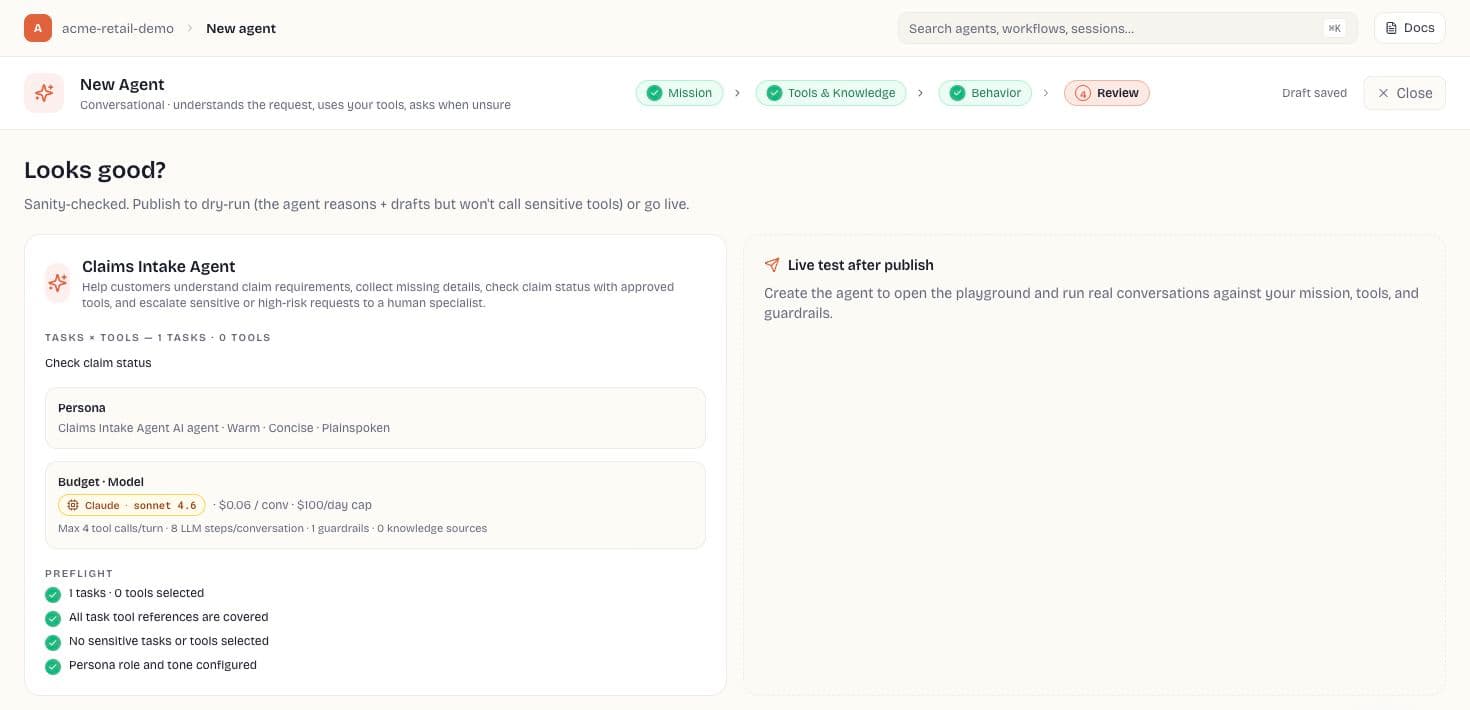
POST /v1/ai-agents with nested tasks[], tools[], guardrails[], persona, and budget caps. New agents start in draft status until you publish from the Deploy tab.
Implementation checklist
- Mission explains the business outcome, supported users, and boundaries.
- Every sensitive task has an AUTH guardrail and every expensive loop has budget limits.
- Tool schemas use stable argument names the model can infer from user language.
- Knowledge sources are scoped to content the Agent is allowed to answer from.
- Review confirms task coverage, tool count, guardrails, and publish readiness before create.